Why Anxiety in Men Often Goes Unnoticed and What to Do About It

Anxiety in men often goes unnoticed because it rarely looks like fear or worry. It shows up as irritability, overthinking, or shutting down. Many men learn to hide vulnerability, so they mask anxiety through work, numbness, or distraction. Understanding how anxiety in men appears differently is the first step toward healing, regulation, and real support.
Why Does Anxiety in Men Often Go Unnoticed?
Anxiety in men often goes unnoticed because it rarely looks like the fear or panic people expect. Many men don’t show worry on the outside. Instead, they stay busy, get quiet, or become irritated. These behaviors hide anxiety so well that even you may not realize you’re struggling.
Men are taught to stay composed, solve problems, and keep emotions private. When you feel overwhelmed, you push through it instead of slowing down. Men often underreport symptoms and avoid seeking support, which makes anxiety harder to detect.
Instead of saying “I’m anxious,” you might work longer hours, distract yourself, or shut down emotionally. These coping habits look like discipline, but they’re often signs of tension and overload.
Anxiety in men goes unnoticed, not because the symptoms are mild, but because they hide behind behaviors people mistake for strength.
How Does Anxiety in Men Show Up Differently Than Anxiety in Women?
Anxiety in men often shows up in ways that don’t look like anxiety at all. Instead of expressing fear or overwhelm, many men become irritable, restless, or emotionally distant. You may feel tension in your body, lose patience quickly, or shut down when emotions rise.
Women are more likely to talk about anxiety openly. Men often redirect it into action. Working harder, staying busy, or numbing out with screens, food, or alcohol. Men frequently experience physical symptoms like chest tightness, stomach discomfort, headaches, or fatigue rather than naming their emotional distress.
You might also feel anger instead of worry. Anger becomes a shield when acknowledging anxiety feels unsafe or unfamiliar. This emotional transformation makes anxiety harder to recognize and easier to ignore.
Anxiety in men is not quieter. It’s just expressed differently, through behavior, tension, and withdrawal rather than visible fear.
What Are the Signs of Anxiety in Men That Often Get Missed?
Anxiety in men often feels like a constant hum in the background, a pressure you can’t turn off. You wake up already tense, and small tasks feel heavier than they should. Your mind races, even over simple decisions, and you struggle to relax because you’re always bracing for something to go wrong.
Some days, anxiety feels like irritability. You snap at small things, or you feel overwhelmed by noise, interruptions, or plans. Other days, it feels like numbness. You move through your routine, but nothing feels meaningful or enjoyable.
You may also notice physical signs, such as tight shoulders, chest pressure, restlessness, stomach issues, or trouble sleeping. These symptoms make everyday life feel harder, even when nothing “big” is happening.
Anxiety in men often creates a pattern of overthinking, avoiding emotions, and pushing through discomfort. You appear fine on the outside, but inside, you’re carrying tension that doesn’t go away. And because you rarely talk about it, the weight feels even heavier.
This day-to-day struggle isn’t about weakness. It’s about carrying too much, too quietly, for too long.

What Triggers Anxiety in Men the Most?
Anxiety in men is often triggered by pressure, pressure to provide, perform, stay strong, or hold everything together. You may look confident on the outside, but inside, these expectations create constant tension. When you feel responsible for everything, even small problems feel overwhelming.
Work is one of the biggest triggers. Deadlines, conflict, and performance reviews keep your nervous system on high alert. Financial worries also add to the weight. When money feels uncertain, your body reacts as if you’re in danger.
Relationship stress triggers anxiety, too. Arguments, emotional conversations, or fear of disappointing your partner can make you shut down or withdraw. Instead of expressing fear, you feel irritable or distant.
Major life changes, such as becoming a father, job shifts, or health problems, also increase anxiety in men. These moments challenge your sense of control and identity. Even positive changes can trigger anxiety when you’re already overwhelmed. The body reacts to pressure, not meaning.
Anxiety in men often rises in moments where you feel alone with responsibility, even when you’re surrounded by people who care.
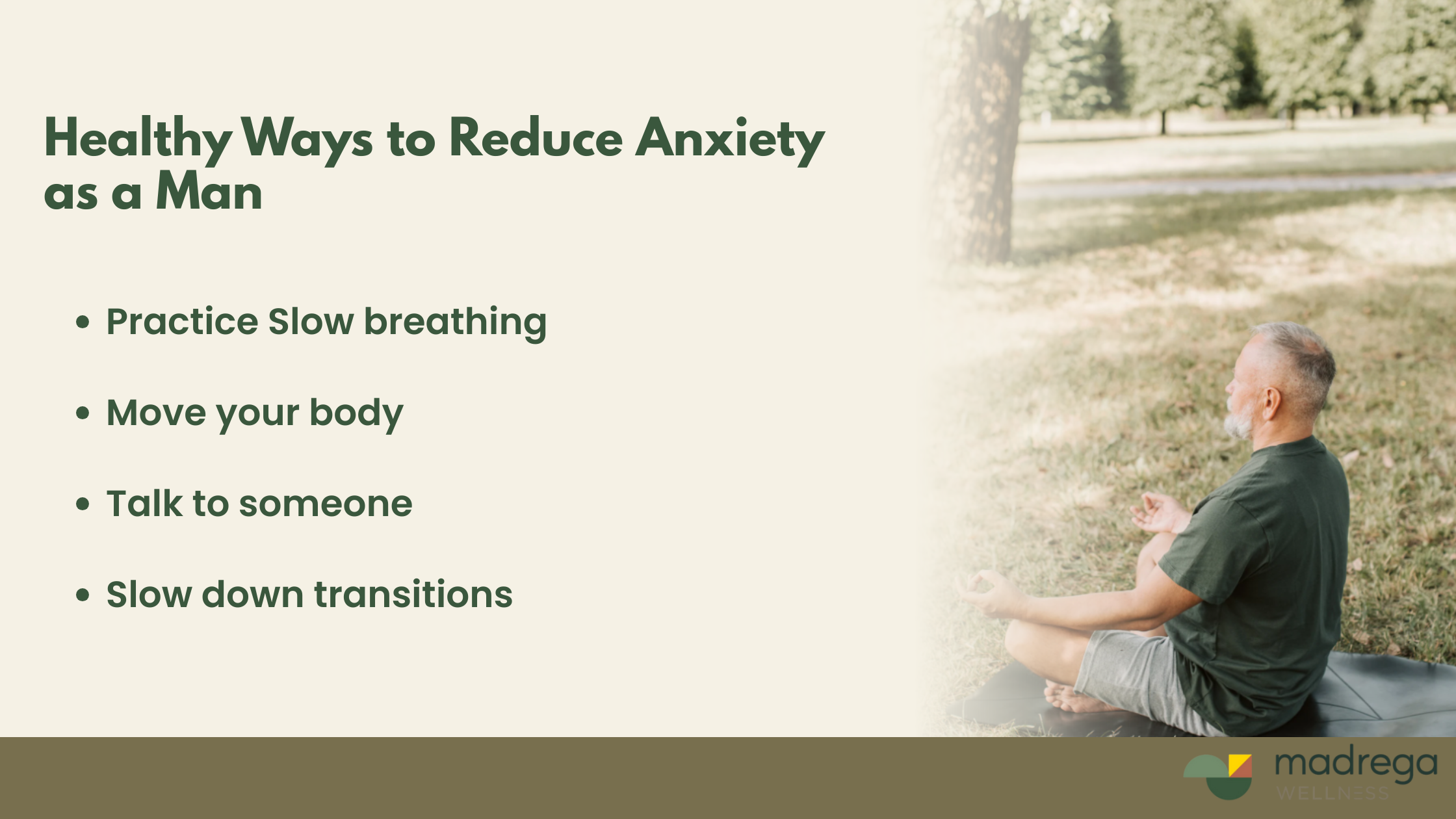
What Can Men Do Today to Reduce Anxiety in Healthy Ways?
You can start reducing anxiety in men with simple, practical changes that help your body and mind slow down. You don’t need to fix everything at once. You just need small steps that bring your nervous system out of stress mode.
Start with your breath. Slow breathing reduces anxiety quickly. Even one minute of deep, steady breathing tells your brain you’re safe. This helps calm racing thoughts and physical tension.
Move your body. Anxiety builds energy in your muscles. A walk, stretch, or short workout releases that pressure. Movement is one of the most effective ways to manage stress and reduce anxiety.
Limit overstimulation. Constant noise, screens, and tasks keep your mind overloaded. Try spending a few minutes in silence or stepping outside. When your environment calms down, your body follows.
Talk to someone. You don’t need to share everything; just choose one person you trust. Speaking about anxiety reduces its intensity. Silence makes it heavier.
Set one boundary. Protecting your time reduces anxiety more than you think. Say no to one extra task. End your workday on time once this week. Boundaries create breathing room.
Slow down transitions. Many men jump from work to family to tasks without a pause. Take a short moment between activities: breathe, reset, and release tension.
Small steps won’t erase anxiety overnight, but they break the pattern of carrying everything alone. They help you feel more grounded, more present, and more in control.
How Can Therapy Help With Anxiety in Men?
Therapy helps with anxiety in men by giving you a safe place to slow down and understand what’s happening inside you. Most men carry anxiety quietly, so therapy becomes the first space where you can talk honestly without pressure to perform or “stay strong.”
A therapist helps you recognize patterns you may not see: irritability, shutdown, overthinking, or emotional distance. You learn why these reactions happen and how to manage them before they take over. Therapy also teaches grounding skills, breathing techniques, and emotional regulation so you can stay steady during stressful moments.
Men often learn to avoid emotions, but avoidance increases anxiety. In therapy, you practice facing emotions in a calm, controlled way. This reduces tension in your body and helps your nervous system reset.
Therapy also strengthens relationships. When anxiety makes you withdraw or shut down, communication suffers. You learn how to express what you feel without anger or defensiveness. Our article on rebuilding trust in relationships explains how emotional awareness supports connection, something therapy builds over time.
At Madrega Wellness, therapy is not about fixing you. It’s about giving you tools, clarity, and support so anxiety no longer controls your day.
FAQ- Anxiety in Men
Q1. Why is anxiety in men hard to recognize?
Men often show anxiety through anger, withdrawal, or overworking instead of visible fear or worry.
Q2. What are the common signs of anxiety in men?
Irritability, tension, restlessness, trouble relaxing, physical pain, overthinking, or emotional shutdown.
Q3. How does therapy help with anxiety in men?
Therapy teaches emotional regulation, reduces stress responses, and gives men tools to calm their nervous system.
Q4. Can anxiety in men improve without medication?
Yes, through therapy, lifestyle changes, mindfulness, and emotional support. Medication can help, too, if the anxiety is severe.
Written by the Madrega Wellness Team — specialists in anxiety in men, emotional awareness, and therapy for stress, masculinity, and modern identity.