Long-Term Effects of Emotional Suppression in Men and Their Mental Health

Many men learn early on to push feelings aside, stay composed, and keep moving forward, even when emotions quietly build underneath. At first, this approach can feel functional. You stay in control. You avoid conflict. Life keeps moving.
But over time, the effects of suppressing emotions in men begin to show up in subtle but meaningful ways. Emotional health, relationships, and overall well-being can suffer, often without a clear explanation for why things feel off.
Why do Men Feel Emotionally Suppressed?
Emotional suppression is the habit of pushing feelings down instead of expressing them. You may notice emotions arise: stress, sadness, fear, or frustration, and then quickly dismiss them. Emotional expression can feel uncomfortable or overwhelming, even in relationships that feel safe.
For many men, suppression feels practical. You stay focused. You avoid conflict. You keep things moving. But suppression doesn’t remove emotion; it delays it. The feeling stays in the body, even if it leaves your awareness.
Emotional suppression in men often shows up as control rather than expression. You manage situations. You stay logical. You avoid vulnerability because it feels unsafe or unnecessary. These patterns help in the short term but create distance in the long term.
This isn’t about weakness or avoidance by choice. Emotional suppression is usually learned early, reinforced by culture, family, and expectations around masculinity. Once learned, it can feel like the only way to cope.
Understanding what emotional suppression is gives you language for something you may have felt for years but never named.
Why Emotional Suppression Develops Over Time?
Emotional suppression in men usually develops as a form of adaptation. Early on, you may have learned that expressing emotion led to discomfort, dismissal, or consequences. Staying quiet felt safer than being misunderstood.
Over time, this coping strategy gets reinforced. You’re praised for staying calm, handling things alone, or not letting emotions interfere with responsibilities. The message becomes clear: emotions slow you down, so you learn to manage life without them.
Life experiences also deepen suppression. Stressful work environments, relationship conflict, grief, or trauma can push you further into emotional control. When there’s no space to process what you feel, you store it instead.
Cultural expectations play a role, too. Many men are taught that strength means self-containment. Vulnerability is framed as weakness, even though it’s a natural human response. Suppression becomes part of identity, not just behavior.
Emotional suppression in men doesn’t develop overnight. It builds slowly, layer by layer, until it feels normal. And because it works for a while, it often goes unquestioned — even as the cost grows.
What are the long-term effects of suppressing emotions?
Emotional suppression in men may feel like control in the short term, but it often creates strain over time. When emotions don’t move, they don’t disappear; they stay in your body and nervous system. Eventually, that builds into chronic stress, emotional numbness, or anxiety.
Many men experience emotional numbness without realizing where it comes from. You may feel tense even when life is calm, disconnected from joy, or easily overwhelmed by small stressors. This pattern is closely linked to emotional suppression and anxiety, where unprocessed feelings keep the nervous system on high alert. Research suggests men suppress emotional expression more than women, which can make distress harder to identify and harder to release.
Over time, emotional suppression can also contribute to depression. Emotional suppression and depression are often connected not because men lack resilience, but because nothing is being processed. If this sounds familiar, our article on why anxiety in men often goes unnoticed and what to do about it explains how suppressed emotions can show up through tension, shutdown, and overthinking.
Another common experience is men shutting down emotionally. You might believe you should be able to handle everything alone. But that belief often increases isolation and self-criticism. Our piece on why men’s mental health is still stigmatized and how to change it speaks to how these expectations keep men suffering quietly.
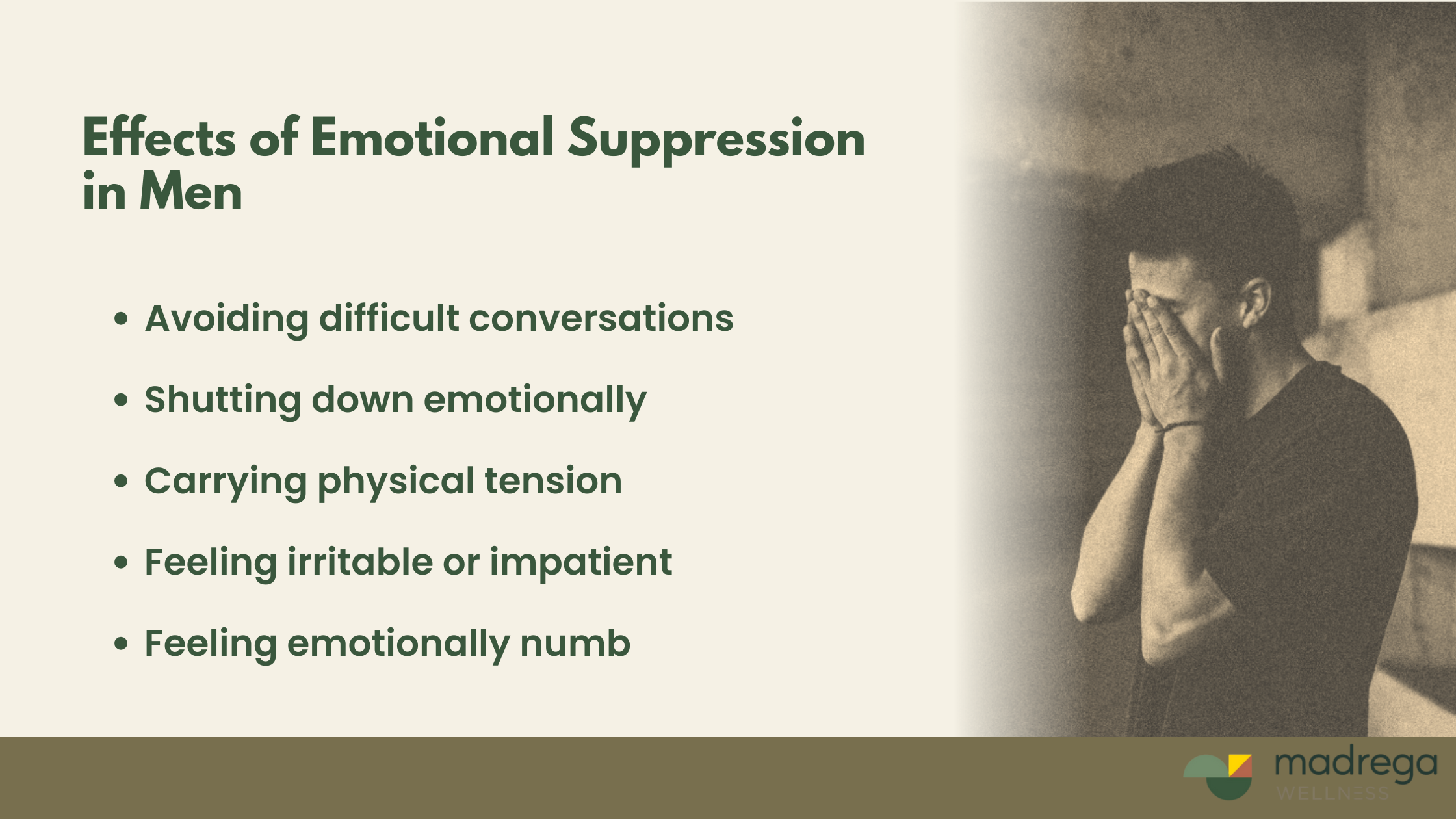
What Emotional Suppression Can Look Like Day to Day
Signs of emotional suppression in men often show up through patterns you may not immediately recognize as emotional at all:
Staying constantly busy
You keep moving from task to task because slowing down feels uncomfortable or unsafe. Being busy helps you avoid noticing what you feel.
Avoiding difficult conversations
You delay or sidestep emotional talks, even with people you care about, because you don’t know how to express what’s inside.
Shutting down emotionally
When conversations become vulnerable, you go quiet, feel numb, or mentally check out to protect yourself.
Carrying physical tension
Suppressed emotions often settle in the body as tight shoulders, clenched jaw, headaches, or restlessness that never fully releases.
Feeling irritable or impatient
Small frustrations trigger strong reactions because unexpressed emotions build pressure beneath the surface.
Struggling to sleep
Your body stays alert at night, replaying thoughts or holding tension even when you’re exhausted.
Feeling emotionally numb
You don’t just avoid pain, you also struggle to feel excitement, joy, or connection.
Finding less joy in things you once enjoyed
Activities that used to feel grounding or rewarding now feel flat or effortful.
Handling everything alone
You rely on yourself for everything and rarely ask for help, even when you’re overwhelmed.
Minimizing your own stress
You tell yourself it’s “not that bad” or that others have it worse, even when your body says otherwise.
These patterns aren’t character flaws. They’re learned ways of coping when emotions don’t feel safe to express. Over time, though, they can quietly drain energy, connection, and emotional balance.

How Does Emotional Suppression Affect Men’s Relationships?
Emotional suppression in men often creates distance in relationships, even when love and commitment are strong. When you push feelings down, it becomes harder to share what you need or understand what your partner is asking for emotionally.
You may listen to words but miss what’s underneath them. Conversations feel confusing or draining, so you withdraw or respond logically instead of emotionally. Over time, this can make your partner feel unseen, while you feel misunderstood or overwhelmed. We explore this dynamic of how emotional suppression affects relationships further in our article on why listening in relationships for men is hard and how to get better.
Suppression also affects intimacy. When emotions stay locked away, closeness can feel unsafe or uncomfortable. You may want a connection but not know how to access it without feeling exposed.
Conflict tends to linger longer, too. Instead of addressing issues as they come up, suppressed emotions resurface as shutdown, irritability, or defensiveness. Small problems grow because nothing is being processed openly.
Emotional suppression doesn’t mean you don’t care about your relationships. It usually means you care deeply, but never learned how to stay emotionally present without protecting yourself. Learning to name and share feelings can slowly restore connection, trust, and ease.
How Can Men Begin to Heal Emotional Suppression?
Therapy for emotional suppression in men focuses on creating safety, not pressure. You’re not asked to perform or explain everything. You learn to slow down and notice emotions as they arise, without needing to control or avoid them.
In therapy, men often start by building emotional literacy. You practice naming feelings, sensing where they live in your body, and tolerating them without shutting down. Supportive therapeutic environments help reduce long-standing suppression patterns.
Healing doesn’t mean becoming someone else. It means restoring access to the full range of your emotions, including calm, connection, and joy. If you’re ready to explore support, reach out to us to take the next step at your pace.
Emotional suppression helped you cope for a time. Therapy helps you move beyond coping, toward balance, clarity, and genuine connection!
FAQ: Emotional Suppression in Men
Q1. What is emotional suppression in men?
Emotional suppression in men is the habit of pushing emotions down instead of expressing or processing them.
Q2. Can emotional suppression cause anxiety or depression?
Yes. Over time, suppressed emotions can contribute to anxiety, depression, burnout, and physical stress symptoms.
Q3. Why do men suppress emotions more than women?
Many men were taught from a young age that emotional expression is unsafe or unacceptable.
Q4. Can therapy help emotional suppression in men?
Yes. Therapy helps men reconnect with emotions safely and build healthier ways to process stress and feelings.
Written by the Madrega Wellness Team, specialists in men’s mental health, emotional regulation, and therapy that helps men reconnect with themselves safely and authentically