Does Anger Come as a Secondary Emotion to You? Learn What Hides Behind the Anger in Men

Anger in men often works as a secondary emotion, meaning it shows up first, while more vulnerable feelings stay hidden underneath. For many men, emotions like hurt, rejection, shame, or fear feel harder to express, so anger becomes the more accessible response. When you understand this pattern, you gain the ability to pause, reflect, and respond with awareness instead of reacting on autopilot.
Is Anger Your Secondary Emotion?
Anger in men often feels immediate and powerful. It rises fast. It gives you energy. It can even feel clarifying. But that intensity can hide something softer underneath.
Psychologically, we distinguish between primary and secondary emotions. Primary emotions are the first, raw feelings you experience: hurt, fear, embarrassment, and sadness. Secondary emotions are reactions to those feelings. Anger often develops second. It steps in quickly and masks vulnerability.
For many men, anger feels safer than hurt. Hurt feels exposed. It invites uncertainty. Anger, on the other hand, feels strong and controlled. It gives you a sense of power when something inside feels threatened.
You might notice this pattern in moments that escalate quickly. A small criticism feels like disrespect. A misunderstanding turns into defensiveness. A disappointment becomes irritation. The speed of the anger can make it seem like the original emotion never existed, but often, it was there first.
This doesn’t mean anger is wrong. Anger can signal that something matters to you. The key question is whether it’s the first emotion or the second one protecting something more vulnerable.
When you begin to ask that question, you move from reacting to understanding. And that shift alone can change how anger and mental health interact in your life.
Why Do Men Feel Angry Instead of Sad or Hurt?
Many men don’t consciously choose anger. It becomes the default because it feels familiar and socially acceptable.
From an early age, boys often receive subtle messages about emotional expression. Sadness may be met with discomfort. Fear may be dismissed. Vulnerability can feel risky. Over time, this shapes male emotional expression in quiet but powerful ways.
Anger, however, is rarely discouraged. It can be framed as strength, dominance, or decisiveness. So when hurt or rejection arises, anger steps in as the more accessible response. It protects you from feeling exposed.
There’s also an emotional vocabulary gap that affects many men. If you were never encouraged to name emotions like disappointment, shame, or loneliness, you may not immediately recognize them. Anger becomes the umbrella emotion. It’s easier to say “I’m annoyed” than “I felt embarrassed” or “That really hurt.”
This is why men feel angry instead of sad in many situations. The anger isn’t random. It’s protective. It shields the ego from feeling small, rejected, or inadequate.
Anger can function as a defense against deeper vulnerability. When you understand that anger and vulnerability are often connected, the reaction starts to make more sense.
Recognizing this pattern isn’t about suppressing anger. It’s about expanding your emotional range. When you can access the first emotion instead of only the second, your responses become more intentional and less automatic.
What Emotions Often Hide Beneath Anger in Men?
Anger rarely appears in isolation. When you slow down and examine the moment before it rises, there is usually another emotion already present.
Rejection is one of the most common. A partner pulls away. A colleague questions your work. A friend forgets something important. The initial feeling may be, “I’m not valued.” But instead of expressing that vulnerability, anger takes over.
Embarrassment can also sit beneath anger. If you make a mistake publicly or feel exposed, the body reacts quickly. Heat rises. Muscles tighten. Anger helps you regain control when your ego feels threatened.
Shame is another powerful driver. When something challenges your identity, as a capable man, provider, partner, or father, shame can surface silently. Anger shields that shame from being seen, even by yourself.
Fear often hides there, too. Fear of failure. Fear of losing respect. Fear of not being enough. These fears can feel destabilizing, so anger steps in to restore a sense of strength.
Loneliness and disappointment are quieter but equally common. When expectations aren’t met, or the connection feels distant, anger can become the outward expression of an unmet need.
Understanding this changes the way you interpret your reactions. Instead of asking, “Why am I so angry?” the more useful question becomes, “What did that situation make me feel about myself?” Learning how to be more confident as a man is a great way to start answering these questions.
When men begin identifying the first emotion, the hidden hurt in men that often goes unnamed, anger becomes easier to manage.
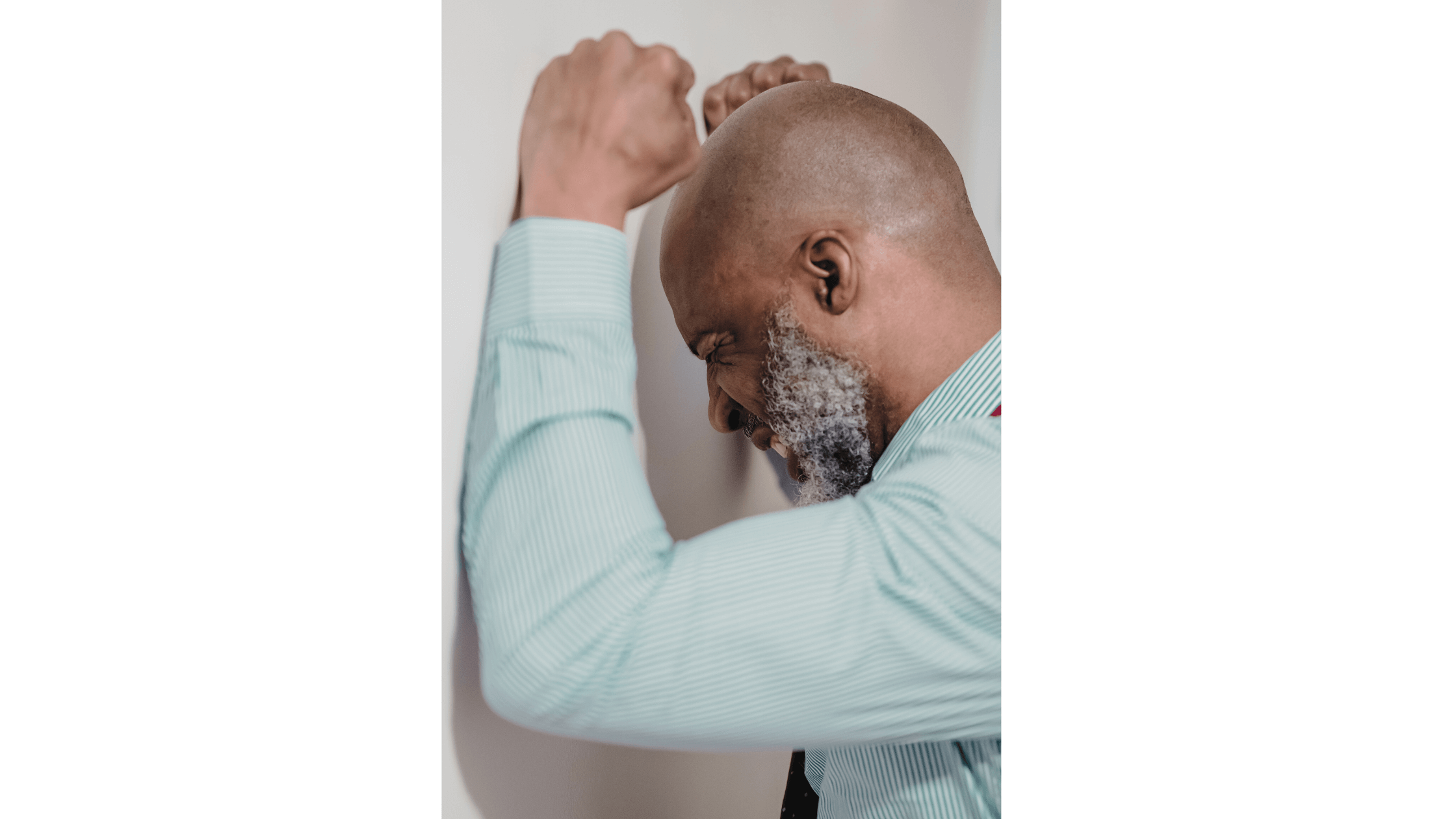
How Does Emotional Suppression in Men Turn Hurt Into Anger?
Emotional suppression in men often develops slowly. When hurt, disappointment, or fear are repeatedly pushed down, the nervous system adapts. Instead of registering vulnerability, it moves quickly into activation.
Anger activates the body. It feels strong and decisive. Hurt feels exposed and uncertain. Over time, the brain creates a shortcut: vulnerability → threat → anger.
This reaction can feel automatic and disproportionate because the original emotion never had space to be processed. Chronic stress can also increase irritability and emotional reactivity in men, a pattern sometimes discussed in relation to “irritable male syndrome”.
If you want a deeper look at how emotional suppression in men shapes long-term mental health and reactivity, we explore that more fully here.
What Happens When Anger Becomes the Only Acceptable Emotion?
When anger becomes the only emotion you allow yourself to express, your emotional range narrows. Everything starts to pass through the same filter.
Disappointment becomes irritation. Fear becomes defensiveness. Hurt becomes accusation. Over time, this pattern can strain relationships. Conversations escalate faster. You may feel misunderstood, while others experience you as reactive or distant. Emotional distance grows, not because you don’t care, but because anger keeps vulnerability out of reach.
There are also internal consequences. Many men feel guilty after angry reactions. You may think, “That wasn’t that serious. Why did I react like that?” That cycle: reaction, regret, self-criticism, slowly erodes self-trust.
When anger becomes the default, burnout can follow. Carrying constant activation is exhausting. Your nervous system never fully resets.
How to Recognize When the Shift Happens
Becoming aware of the shift from vulnerability to anger is the turning point. Here are signs to look for:
Your reaction feels faster than your understanding.
The anger rises before you fully process what happened.
Your body tightens immediately.
Jaw clenches. Chest tightens. Voice sharpens.
You move into blame quickly.
Instead of asking what you felt, you focus on what the other person did wrong.
You feel small or exposed underneath the anger.
If you pause and ask, “What did that make me feel about myself?” the answer is often revealing.
You regret the intensity later.
If the reaction feels disproportionate after the fact, a primary emotion was likely underneath.
Recognizing this shift doesn’t mean suppressing anger. It means expanding the emotional window before reacting. That space, even a few seconds, is where change begins.
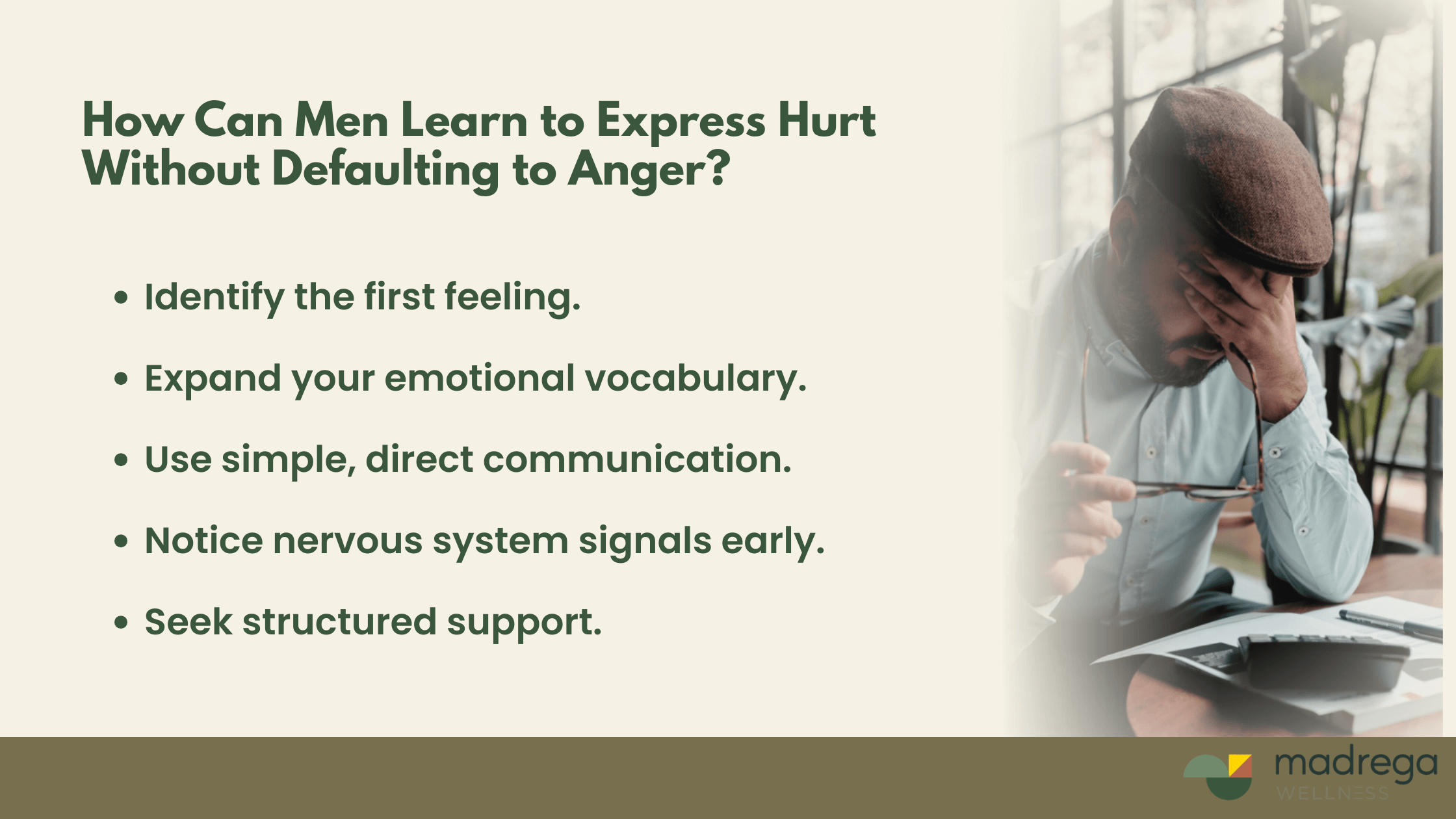
How Can Men Learn to Express Hurt Without Defaulting to Anger?
The goal isn’t to eliminate anger. Anger carries useful information. The goal is to access the emotion underneath it.
Learning to express hurt without defaulting to anger starts with slowing the moment down. That doesn’t mean staying silent. It means creating a pause before reacting.
Here are practical ways to begin:
Identify the first feeling.
When anger rises, ask yourself: What happened right before this? Was it rejection? Embarrassment? Disappointment? Naming the primary emotion reduces the intensity of the secondary one.
Expand your emotional vocabulary.
Many men were never taught language for subtle emotions. Instead of “mad,” try words like frustrated, dismissed, overlooked, insecure, or hurt. The more precise the language, the less reactive the response.
Use simple, direct communication.
You don’t have to become overly emotional. A sentence like, “That caught me off guard,” or “I felt dismissed there,” builds connection without escalating conflict. This is where anger and vulnerability begin to work together instead of against each other.
Notice nervous system signals early.
If your body tightens, breath shortens, or voice sharpens, that’s the cue to slow down. Emotional regulation begins in the body before it begins in the mind.
Consider structured support.
Therapy often helps men retrain emotional patterns safely. It provides space to practice identifying underlying feelings and expressing them without losing control. Many men are hesitant at first, which we explore in our article on why men avoid therapy and what changes when they try it. But once the skill is learned, emotional expression becomes clearer and less reactive.
Expressing hurt isn’t weakness. It’s clarity. If you need a safe space to talk about your emotions, we are here for you!
FAQ:
Q1. Is anger a secondary emotion?
Yes. Anger often appears after a more vulnerable feeling, like hurt, fear, or shame.
Q2. Why do men show anger instead of sadness?
Many men were taught that anger is more acceptable than vulnerability, making it easier to express.
Q3. What emotions are usually underneath anger?
Common underlying emotions include hurt, rejection, embarrassment, fear, or disappointment.
Q4. Can therapy help with anger as a secondary emotion?
Yes. Therapy helps identify underlying emotions and build healthier ways to express them.
Written by the Madrega Wellness Team
Madrega Wellness specializes in men’s mental health, emotional resilience, and therapy that helps men grow beyond fear, pressure, and performance. We support men in understanding their emotional patterns so they can build stronger relationships, clearer communication, and steadier self-trust.